
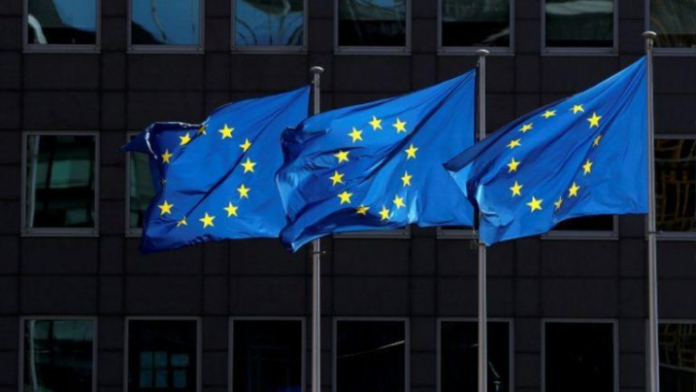
This summer offers plenty to keep us entertained. Between the FIFA World Cup 2026 and one of the most ambitious tax simplification packages proposed by the European Commission in recent years, there is something for both football enthusiasts and tax professionals. So, between one match and the next, I invite you to spend a few minutes discovering what the EU Tax Omnibus 2026 could mean for businesses operating across Europe.
On 24 June 2026, the European Commission unveiled the EU Tax Omnibus 2026 together with a recast of the Directive on Administrative Cooperation (DAC). Unlike many of the tax initiatives introduced over the last decade, this proposal is not intended to increase taxation or introduce additional reporting obligations. Instead, it marks a welcome change in direction: simplifying the EU corporate tax framework while maintaining effective safeguards against tax avoidance.
This shift comes at an important moment. Over recent years, multinational groups have had to navigate an increasingly complex legislative landscape shaped by the Anti-Tax Avoidance Directives (ATAD), multiple amendments to the DAC framework, mandatory disclosure rules, the FASTER initiative and, more recently, the implementation of the OECD’s Pillar Two Global Minimum Tax. While each of these measures pursued legitimate policy objectives, together they have created significant compliance costs and administrative burdens.
The Tax Omnibus package recognises a concern long shared by tax professionals: an effective tax system should combat abuse without making legitimate business unnecessarily complicated.
A Different Legislative Philosophy
Perhaps the most important aspect of the proposal is not any individual amendment, but its underlying philosophy.
For years, EU tax policy has largely focused on introducing new anti-avoidance measures. The Tax Omnibus instead embraces the concept of better regulation—reducing duplication, simplifying administrative procedures and improving legal certainty without weakening the fight against aggressive tax planning.
This is an important distinction. Simplification should not be interpreted as deregulation. The proposal retains robust anti-abuse safeguards while acknowledging that excessive administrative complexity can itself become an obstacle to investment and competitiveness.
Simplifying Withholding Tax Relief
One of the most practical changes concerns withholding tax procedures.
The proposal removes certain minimum shareholding thresholds under the Parent-Subsidiary Directive and the Interest and Royalties Directive, while replacing many advance authorisation requirements with taxpayer self-assessment supported by post-transaction controls. These measures are complemented by the FASTER initiative, which aims to standardise withholding tax refund procedures across the European Union.
For multinational groups, this could significantly reduce the administrative burden associated with cross-border dividends, interest and royalties. Faster access to withholding tax relief should improve cash flow while allowing tax departments to spend less time managing refund claims.
The proposal nevertheless preserves targeted anti-abuse rules to prevent situations of double non-taxation where effective taxation does not exist.
A More Modern ATAD
The Anti-Tax Avoidance Directive also undergoes its most significant revision since its introduction.
The proposal harmonises interest limitation rules, strengthens group escape mechanisms and carry-forward provisions, excludes genuine third-party financing and removes the imported hybrid mismatch rules. It also recognises that where multinational groups are already subject to Pillar Two, certain Controlled Foreign Company (CFC) provisions may become less relevant.
Perhaps even more interesting is the introduction of a common EU framework for research and development incentives. Qualifying R&D expenditure could generally be deducted immediately or over four years, subject to appropriate anti-abuse safeguards.
This represents a notable evolution in ATAD’s role. Originally conceived as an anti-avoidance directive, it would now also contribute to encouraging investment and innovation.
Facilitating Cross-Border Business
The Tax Omnibus also expands the scope of the Merger Directive to facilitate additional forms of cross-border reorganisations.
Many multinational groups are currently reviewing their European structures following the introduction of Pillar Two. Greater tax neutrality for legitimate reorganisations should allow commercial considerations—not tax obstacles—to drive these restructuring decisions.
The package also strengthens the Dispute Resolution Mechanisms Directive by simplifying complaint procedures, allowing earlier access to arbitration and improving cooperation between tax authorities.
Although these amendments may appear procedural, they could considerably improve legal certainty for businesses operating across several Member States.
Streamlining Tax Reporting
Another important element of the reform is the recast of the Directive on Administrative Cooperation.
The proposal consolidates numerous legislative amendments into a single framework while reducing duplication across reporting obligations. Among the proposed changes are a single group notification for DAC4 and DAC9, the removal of DAC6 reporting for qualifying Pillar Two groups, longer reporting deadlines and simplified DAC7 requirements.
An EU-wide Tax Identification Number verification tool would also improve the quality of exchanged information while reducing administrative errors.
For multinational tax departments, these changes could translate into fewer reporting obligations, greater consistency and lower compliance costs.
Looking Ahead
The Tax Omnibus 2026 remains a legislative proposal and will require approval by the Council following consultation with the European Parliament. Nevertheless, its direction is already clear.
Businesses should begin evaluating how the proposed reforms could affect financing arrangements, holding company structures, withholding tax procedures, reporting obligations and future reorganisations. Even if certain provisions evolve during the legislative process, the Commission has sent a strong signal that simplification will become an increasingly important objective of European tax policy.
Conclusion
Beyond the technical amendments, the Tax Omnibus reflects a broader shift in EU tax policy. The Commission recognises that competitiveness is driven not only by tax rates, but also by the simplicity, predictability and efficiency of the tax system. This evolution is particularly evident in the proposed changes to ATAD, which for the first time balances anti-avoidance objectives with measures that encourage investment and innovation. Ultimately, the greatest benefit for many businesses may not be lower tax liabilities, but reduced compliance costs and a more business-friendly regulatory environment.
For tax professionals, the challenge is no longer simply understanding the new rules but identifying the opportunities that a simpler and more coordinated European tax environment may create.
As for the FIFA World Cup 2026, while I am naturally cheering for my home country, Canada to be still in the competition, I would certainly love to see Spain make it all the way to the final.
The opinion expressed in this article is exclusively that of the author and does not reflect and cannot be related to her professional environment.